Japan
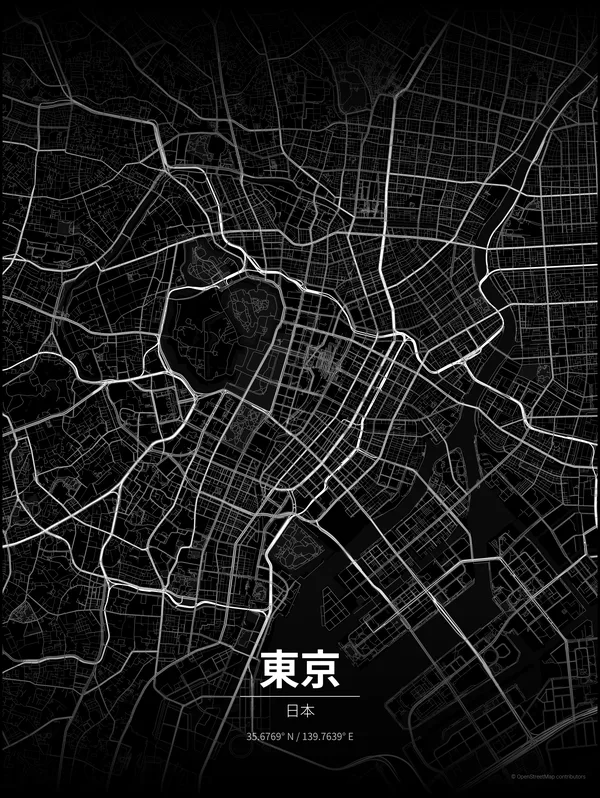
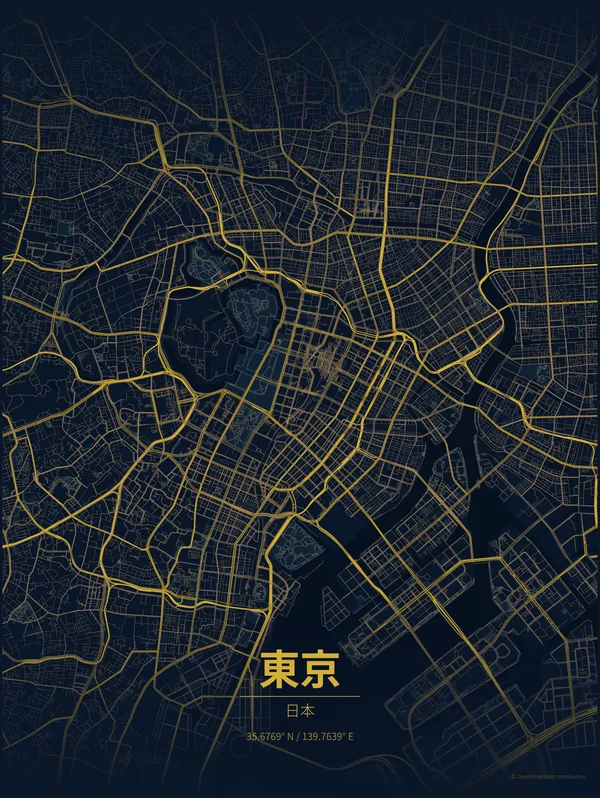
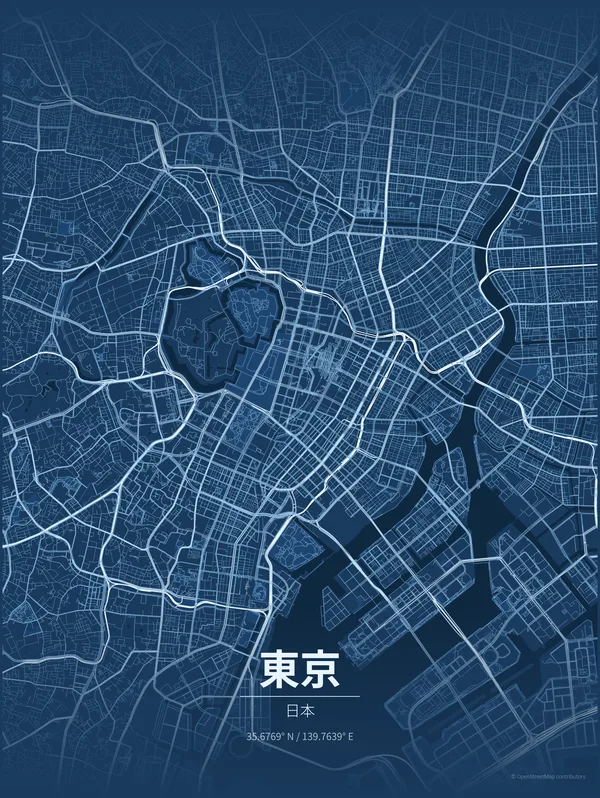
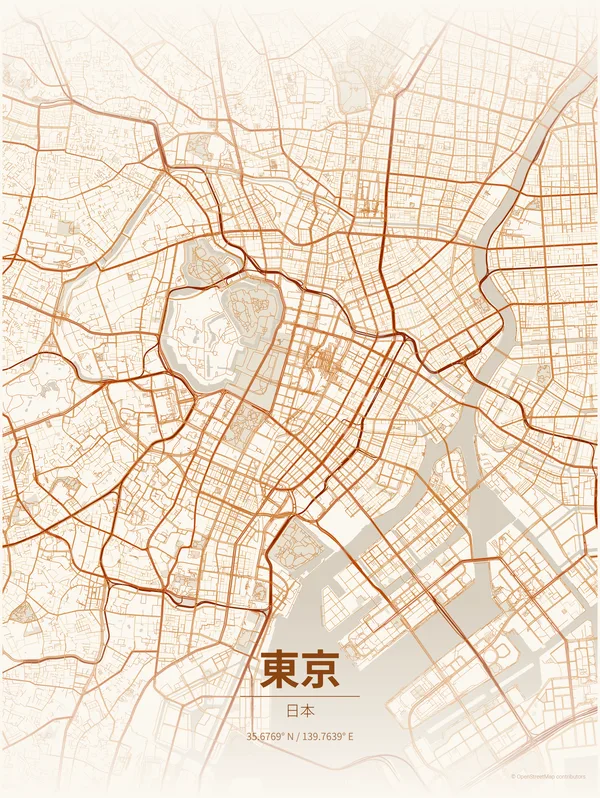
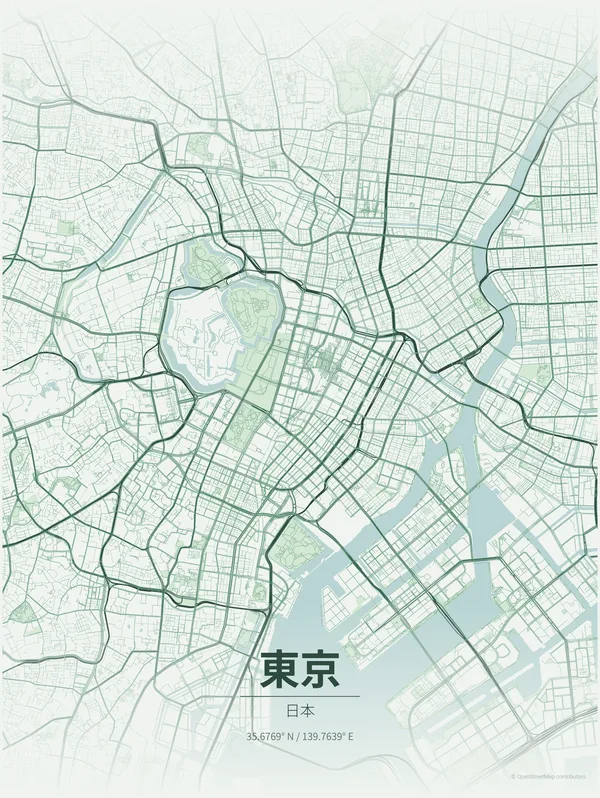
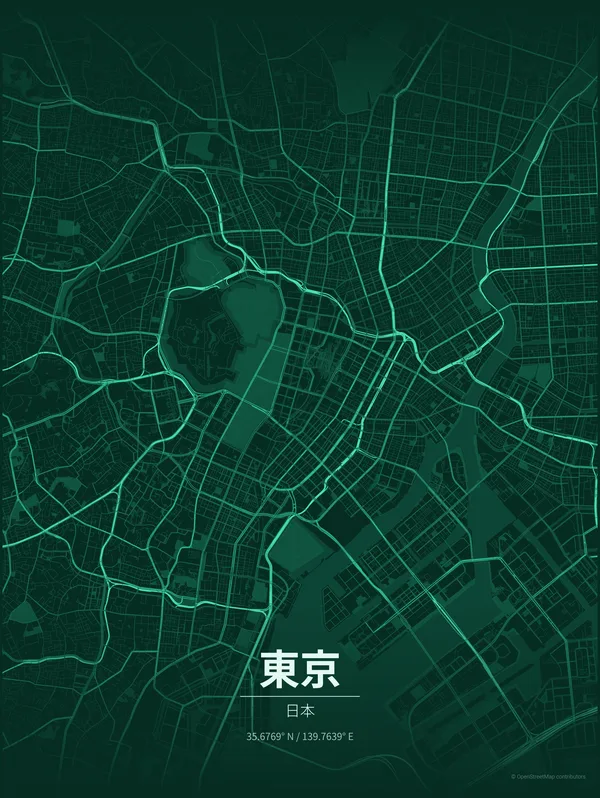
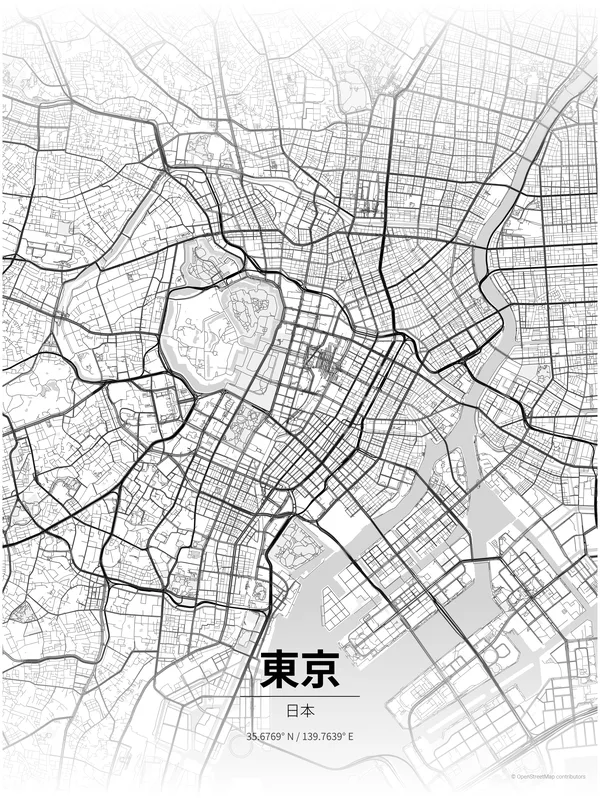
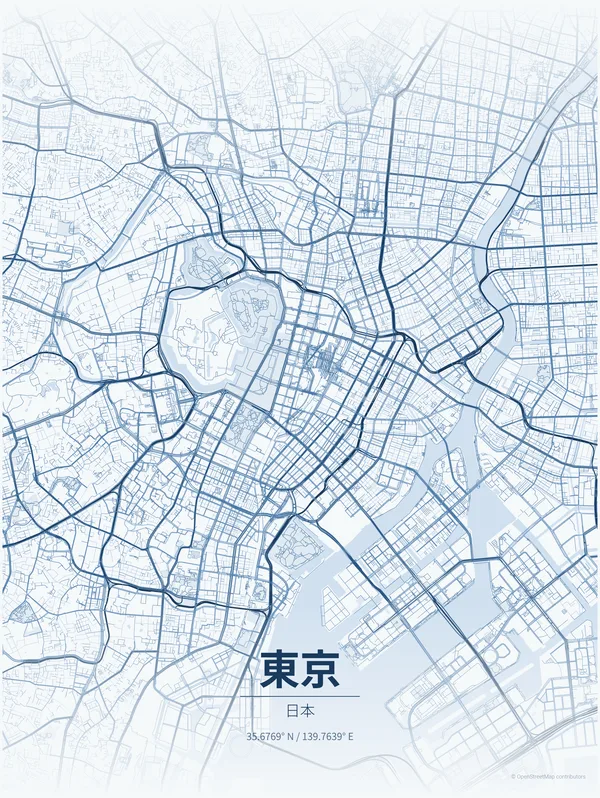
Tokyo map poster
Tokyo is 23 special wards that were once independent cities, spread across 846 square miles of the Kanto Plain. The central three (Chiyoda, Chuo, and Minato) have a daytime population seven times their nighttime number, making large parts of central Tokyo empty after dark. What surprises most people is that Tokyo has no single centre: it has nodes (Shinjuku, Shibuya, Ginza, Ikebukuro) connected by train lines, which is why the map looks less like a city and more like a constellation.
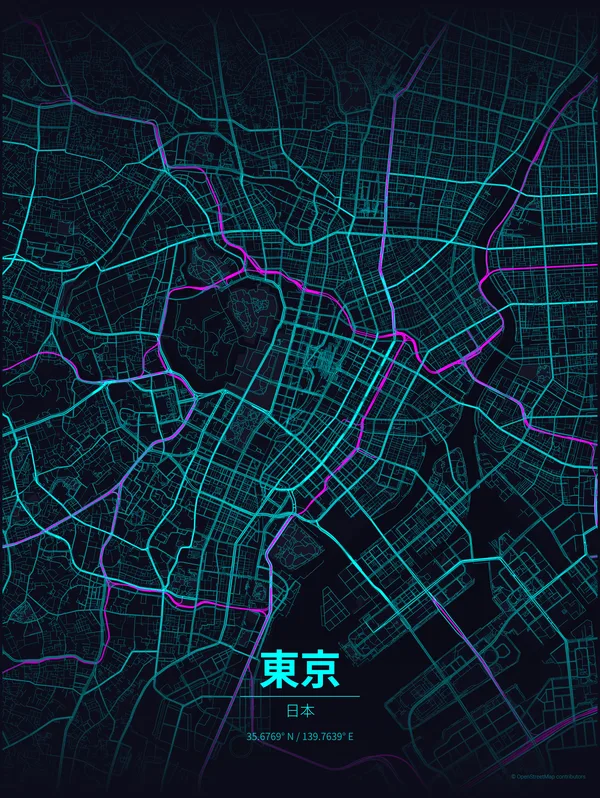
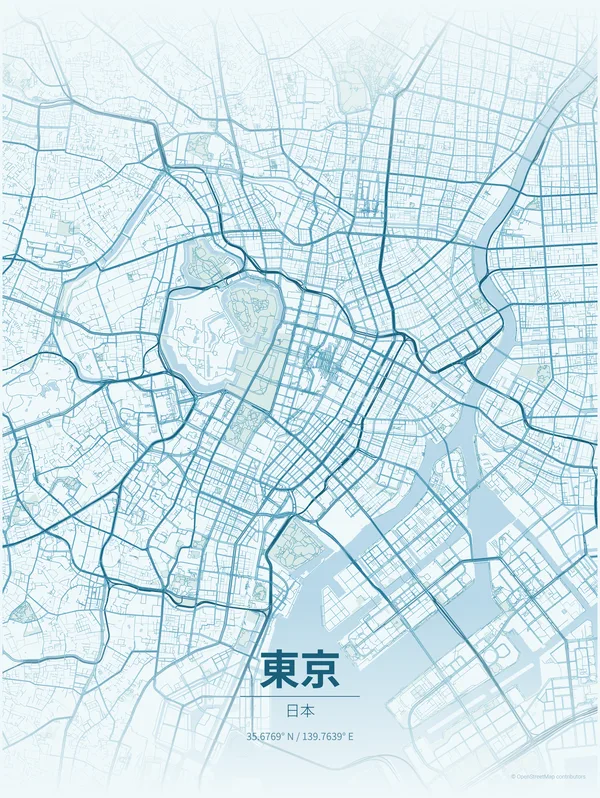
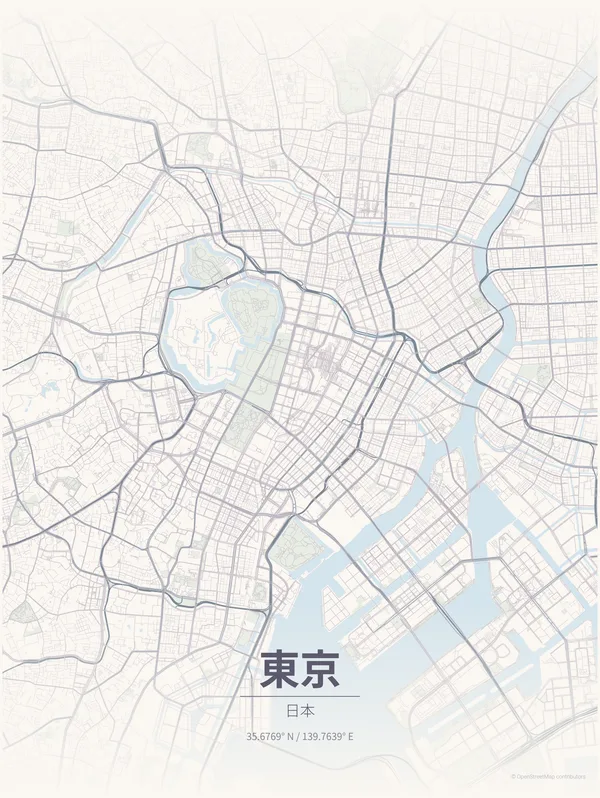
30×40cm / 12×16″
200gsm archival matte
£25 · free shipping
Frequently asked about Tokyo posters
What size is the Tokyo map poster?
The Tokyo map poster measures 30×40cm (roughly 12×16 inches), a standard poster size that fits most ready-made frames available at IKEA, high street shops, and online retailers.
What paper is the Tokyo poster printed on?
All Tokyo posters are printed on 200gsm archival matte paper with UV-resistant pigment inks. The paper is FSC-certified and the inks are rated for decades of display without noticeable fading.
Can I frame the Tokyo map poster?
Yes. The 30×40cm size is a standard frame size. You can find affordable frames at most home goods stores. The poster ships rolled in a sturdy tube and will flatten easily under light pressure or in a frame.
What is the difference between the Tokyo colourways?
The Tokyo poster is available in 11 colourways: from high-contrast Noir (black streets on white) to coastal Swell (teal tones) and electric Strip (neon-inspired). Each colourway uses the same map data but applies a different colour palette to streets, water, green spaces, and background. You can see all 11 on the Tokyo poster page.
How is the Tokyo poster made?
Each Tokyo poster is generated from OpenStreetMap data and rendered as a clean vector map. It is printed on demand when you order, which means no inventory waste and a fresh print every time.
Does the Tokyo poster show landmarks?
The poster focuses on the street network, waterways, and green spaces of Tokyo rather than individual landmarks. It is designed as an abstract city portrait where the street layout itself is the subject.